
Papago
Product status: Status not recorded
No lifecycle review is recorded for this listing. Its inclusion in the directory does not confirm current availability; check the vendor before relying on it.
No status check date recorded
Naver's translation service, tuned for Asian languages: Korean, Japanese and Chinese quality that rivals or beats Western engines on idiomatic text, plus image, handwriting and conversation translation. No lifecycle review is recorded for this listing. Its inclusion in the directory does not confirm current availability; check the vendor before relying on it.
Product preview
Overview
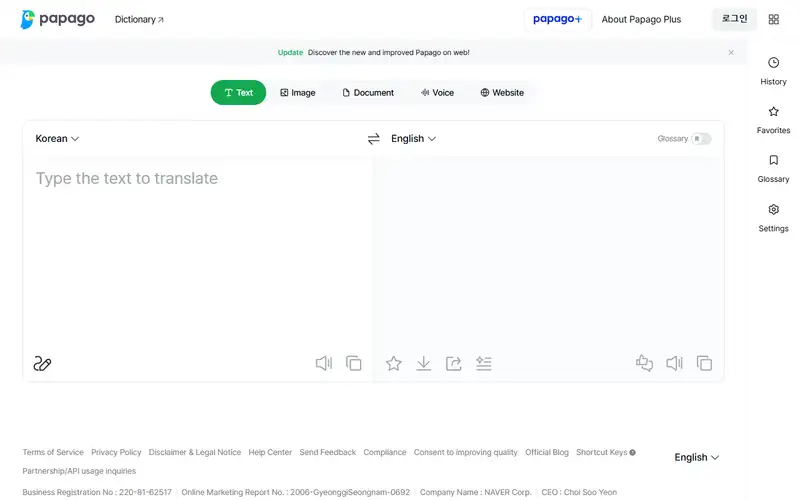
Papago exists because Korean and Japanese are poorly served by English-first translators: Naver trained it on the honorifics, sentence structures and internet slang of its home markets, and for K-content consumers, travelers and cross-border commerce in East Asia it is often the difference between stilted and natural translation.
DeepL still owns European language pairs, and Google covers breadth — Papago's crown is specifically Korean-Japanese-Chinese quality, plus practical modes the others under-serve: camera translation of menus and signs, handwriting input for characters, and a conversation mode tuned for real dialogues. The web/mobile apps are free; enterprise usage runs through Naver's Cloud Platform API. For anyone whose translation life orbits East Asia, Papago is a default tab.
No content sources are recorded for this entry. Its inclusion and existing score do not establish that its claims have been independently verified.
Pros / Cons
Pros
- Best-in-class Korean, Japanese and Chinese output
- Camera, handwriting and conversation modes
- Free, fast, mobile-first apps
- Enterprise API via Naver Cloud
Cons
- European language pairs trail DeepL
- Coverage breadth trails Google
- Best experience skews to East Asian contexts
Who it's for
Travel across Korea, Japan and China
Translating K-content and fan materials
East Asian e-commerce communication
Learning Korean or Japanese with nuance
Bottom line
The translation app East Asia actually uses — English-first tools need not apply for these language pairs.
Key Features
Tags
Frequently asked questions
Is Papago currently available?
No lifecycle review is recorded for this listing. Its inclusion in the directory does not confirm current availability; check the vendor before relying on it.
What is Papago?
Papago is a Productivity tool developed by Naver. It was introduced in 2016, and its developer is headquartered in Seongnam, South Korea. Naver's translation service, tuned for Asian languages: Korean, Japanese and Chinese quality that rivals or beats Western engines on idiomatic text, plus image, handwriting and conversation translation.
Is Papago free?
Papago uses a freemium model: a free tier is available, and paid plans unlock more usage and advanced features.
Is Papago open source?
No — Papago is proprietary software.
What are the best alternatives to Papago?
Notable Productivity alternatives include Notion AI, Grammarly, Canva AI. Browse all 159 tools in our Productivity category for a full overview.
Was this listing useful?
Basic Info
- Pricing
- Freemium
- Editorial score
- ★ 4.4 / 5 How we score
- Platforms
- WebiOSAndroidAPI
- Launched
- 2016
- Headquarters
- Seongnam, South Korea
- Last verified
- Not recorded