
RunPod
RunPod
★ #99 in AI PlatformsProduct status: Status not recorded
No lifecycle review is recorded for this listing. Its inclusion in the directory does not confirm current availability; check the vendor before relying on it.
No status check date recorded
GPU/CPU Pods and Serverless container endpoints for custom workloads; compute lifecycle, persistent storage and security remain separate configuration choices. No lifecycle review is recorded for this listing. Its inclusion in the directory does not confirm current availability; check the vendor before relying on it.
Product preview
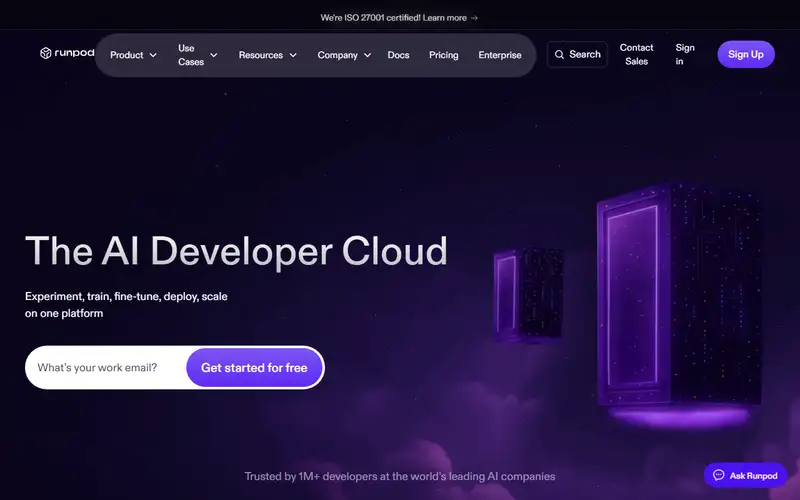
Decision notes
Official-document research
Based on the cited documentation. We did not use the product, purchase a plan, or run quality, speed or reliability tests in this review.
Consider it for
- Teams owning container images, monitoring and backup policies
Choose another approach if
- An assumed fully managed application or automatic protection of all data
Pricing and conditions
Documented terms
Pods meter compute by second; container/volume disks by second and network volumes by hour, despite monthly storage rate labels. Stopped volume disks remain billable; temporary container data is erased on stop. Serverless bills running workers through startup, execution and idle timeout; active workers run continuously. Savings commitments cover compute, not storage. GPU rate, currency, tax, region and final total are unconfirmed.
Pricing source read:
Pricing or terms sourceCode, model and service licensing
Cloud compute access does not license container software, model weights, training data or generated outputs. Runpod terms require third-party rights and describe security as shared responsibility, including your encryption, backups and configuration. The terms permit content processing and third-party offerings have their own terms; do not assume local-only execution, zero retention or identical protections on every provider.
Basis and limits of the recorded score
The existing 4.4 editorial score is retained; its original scoring worksheet is not documented. This docs-only update did not re-score or measure performance.
Overview
Runpod distinguishes configurable Pods from Serverless workers that execute your container behind an endpoint. Pods provide control over software, storage and network setup; Serverless manages worker lifecycle and scaling, with cold starts and active/flex choices. Choose by whether you need a persistent environment or a request-serving workflow. No workload was deployed here.
Compute price is not the full bill. Pod storage can continue after stopping, and Serverless bills startup, execution and idle-timeout phases. Secure and Community Cloud are different provider routes. Backups, application security, model permissions and data settings still require an owner.
Sources
The factual claims in this review were read from the pages below. Each date is when an editor last opened the source, not when the product changed.
- Vendor documentation Checked 2026-10-15
- Vendor documentation Checked 2026-10-15
- Vendor pricing page Checked 2026-10-15
- Vendor pricing page Checked 2026-10-15
- Vendor documentation Checked 2026-10-15
Pros / Cons
Pros
- Separate persistent and request-serving workflows
- Custom containers and documented storage choices
Cons
- Stopping compute does not settle all storage charges
- Cold starts, backups and application security need engineering
Who it's for
Containerized model development on Pods
Custom inference endpoints with reviewed scaling settings
Bottom line
Consider Runpod when you can operate container workloads. Compare Pod and Serverless lifecycle costs, storage persistence and the chosen provider before deployment.
Key Features
Tags
Frequently asked questions
Is RunPod currently available?
No lifecycle review is recorded for this listing. Its inclusion in the directory does not confirm current availability; check the vendor before relying on it.
What is RunPod?
RunPod is a AI Platforms tool developed by RunPod. GPU/CPU Pods and Serverless container endpoints for custom workloads; compute lifecycle, persistent storage and security remain separate configuration choices.
What costs and terms should I check for RunPod?
Pods meter compute by second; container/volume disks by second and network volumes by hour, despite monthly storage rate labels. Stopped volume disks remain billable; temporary container data is erased on stop. Serverless bills running workers through startup, execution and idle timeout; active workers run continuously. Savings commitments cover compute, not storage. GPU rate, currency, tax, region and final total are unconfirmed.
Is RunPod open source?
Cloud compute access does not license container software, model weights, training data or generated outputs. Runpod terms require third-party rights and describe security as shared responsibility, including your encryption, backups and configuration. The terms permit content processing and third-party offerings have their own terms; do not assume local-only execution, zero retention or identical protections on every provider.
What are the best alternatives to RunPod?
Notable AI Platforms alternatives include Hugging Face, Replicate, Ollama. Browse all 138 tools in our AI Platforms category for a full overview.
Was this listing useful?
Basic Info
- Pricing
- Pay-as-you-go
Pods meter compute by second; container/volume disks by second and network volumes by hour, despite monthly storage rate labels. Stopped volume disks remain billable; temporary container data is erased on stop. Serverless bills running workers through startup, execution and idle timeout; active workers run continuously. Savings commitments cover compute, not storage. GPU rate, currency, tax, region and final total are unconfirmed.
- Editorial score
- ★ 4.4 / 5 How we score
- Platforms
- WebAPI
- Last verified
- Not recorded