
Zapier
Zapier
★ #103 in ProductivityProduct status: Status not recorded
No lifecycle review is recorded for this listing. Its inclusion in the directory does not confirm current availability; check the vendor before relying on it.
No status check date recorded
The automation platform connecting thousands of apps, now with AI-powered workflow building, chatbots and AI action steps inside Zaps. No lifecycle review is recorded for this listing. Its inclusion in the directory does not confirm current availability; check the vendor before relying on it.
Product preview
Overview
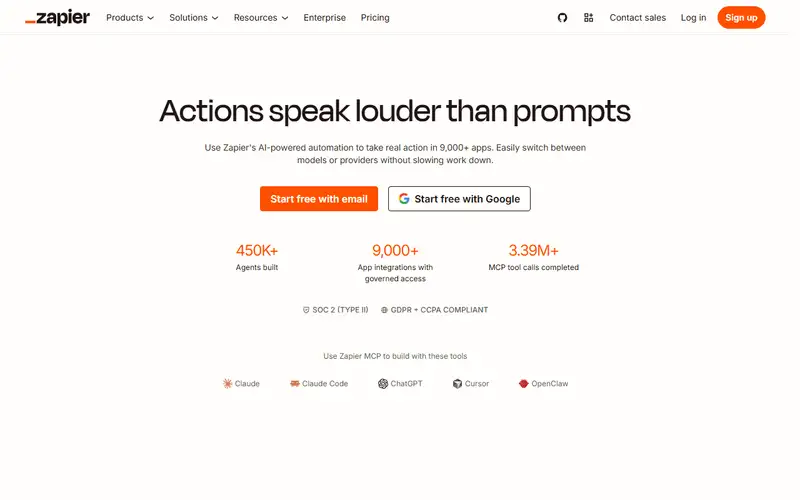
Zapier is the automation incumbent: the vendor claims 9,000-plus app integrations, a no-code editor, and a newer AI layer — Agents, Chatbots, Tables, Interfaces and Canvas — built over the same trigger-action model. A Zap watches one app for a trigger and performs steps in others, which is why 'connect A to B' still defaults to it.
The trade is metering: the free plan carries a small monthly task allowance and paid tiers price by task volume, so a workflow polling a busy inbox burns tasks faster than a weekly digest. Multi-step paths, filters and premium apps sit on higher tiers. For glue between mainstream SaaS it is the fastest path; for self-hosted control, n8n or Activepieces.
Sources
The factual claims in this review were read from the pages below. Each date is when an editor last opened the source, not when the product changed.
- Vendor site Checked 2026-10-12
- Vendor pricing page Checked 2026-10-12
Pros / Cons
Pros
- Largest integration catalog in the category
- AI steps inside standard workflows
- Natural-language workflow building
- Reliable, mature execution platform
Cons
- Task pricing escalates quickly at volume
- Complex logic gets verbose
- Debugging multi-step Zaps can be fiddly
Who it's for
Cross-app workflow automation
AI-enriched data routing
No-code internal tooling
Bottom line
Zapier remains the safest automation bet — and its AI layer now covers what used to require custom scripts.
Key Features
Tags
Frequently asked questions
Is Zapier currently available?
No lifecycle review is recorded for this listing. Its inclusion in the directory does not confirm current availability; check the vendor before relying on it.
What is Zapier?
Zapier is a Productivity tool developed by Zapier. It was introduced in 2011, and its developer is headquartered in Sunnyvale, USA. The automation platform connecting thousands of apps, now with AI-powered workflow building, chatbots and AI action steps inside Zaps.
Is Zapier free?
Zapier uses a freemium model: a free tier is available, and paid plans unlock more usage and advanced features.
Is Zapier open source?
No — Zapier is proprietary software.
What are the best alternatives to Zapier?
Notable Productivity alternatives include Notion AI, Grammarly, Canva AI. Browse all 159 tools in our Productivity category for a full overview.
Was this listing useful?
Basic Info
- Pricing
- Freemium
- Editorial score
- ★ 4.5 / 5 How we score
- Platforms
- Web
- Launched
- 2011
- Headquarters
- Sunnyvale, USA
- Last verified
- Not recorded