
Lakera
Lakera
★ #117 in AI PlatformsProduct status: Status not recorded
No lifecycle review is recorded for this listing. Its inclusion in the directory does not confirm current availability; check the vendor before relying on it.
No status check date recorded
Security for AI applications and agents: guarding what models do, testing them adversarially, and governing employee and agent use. No lifecycle review is recorded for this listing. Its inclusion in the directory does not confirm current availability; check the vendor before relying on it.
Product preview
Overview
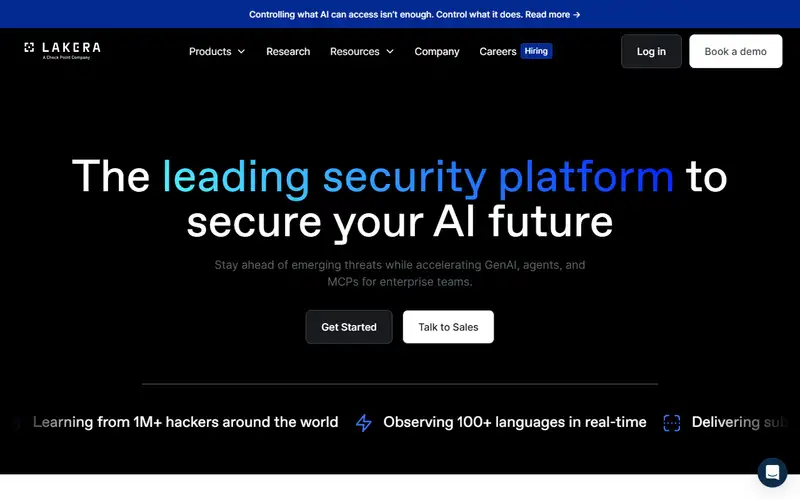
Lakera sells security for systems built on models, and its own framing is the useful part: controlling what AI can access is not enough, control what it does. That moves the problem from the familiar list of permissions to behaviour — an agent with legitimate access to a payment system can still be talked into using it wrongly, and no access-control list catches that.
The offering follows: runtime guardrails on application traffic, protection and governance for employee use of AI tools and for enterprise agents, risk-based testing, and a red-teaming service where humans attack the system. The distinction worth holding on to is between testing and runtime defence. Red teaming finds the attacks that existed on the day it ran; guardrails are what keep working on the attacks invented next week, and neither substitutes for the other. The usual caveats apply and matter more than usual here: a guardrail is itself a model making a judgement about input, so it has false negatives, and any vendor's detection rate was measured against a set of attacks the vendor chose.
Sources
The factual claims in this review were read from the pages below. Each date is when an editor last opened the source, not when the product changed.
- Vendor site Checked 2026-09-19
Pros / Cons
Pros
- Treats behaviour rather than access as the security boundary, which is where agents actually go wrong
- Covers both red teaming and runtime defence, which answer different questions
- Extends to governing how employees use AI tools, not only to protecting the application
Cons
- A guardrail is itself a model judging input, so it has false negatives and false positives
- Detection rates are measured against the vendor's own attack set
- Enterprise pricing and deployment terms are not published, so cost needs a conversation
Who it's for
Defending a customer-facing AI application against prompt injection
Red-teaming an agent before it gets real access
Governing employee use of AI tools
Adding a runtime check in front of model calls
Bottom line
Security for AI systems framed around behaviour rather than permissions, with the usual caveat that the guardrail is a model too.
Key Features
Tags
Frequently asked questions
Is Lakera currently available?
No lifecycle review is recorded for this listing. Its inclusion in the directory does not confirm current availability; check the vendor before relying on it.
What is Lakera?
Lakera is a AI Platforms tool developed by Lakera. Security for AI applications and agents: guarding what models do, testing them adversarially, and governing employee and agent use.
Is Lakera free?
No — Lakera is a paid product. Check the official website for current plans and pricing.
Is Lakera open source?
No — Lakera is proprietary software.
What are the best alternatives to Lakera?
Notable AI Platforms alternatives include Hugging Face, Replicate, Ollama. Browse all 138 tools in our AI Platforms category for a full overview.
Was this listing useful?
Basic Info
- Pricing
- Paid
- Editorial score
- ★ 4.3 / 5 How we score
- Platforms
- APIWeb
- Last verified
- Not recorded